



Why does milk cost us so much? Small farms/ A cow in the EU produces 2.5 times more than in Albania

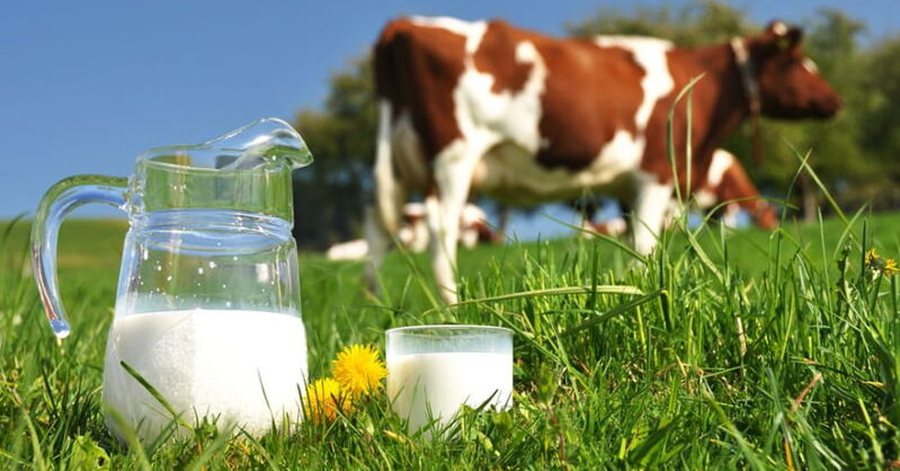
Albania's European integration will require higher standards in food safety, traceability, hygiene and raw material quality. For the dairy sector this is a necessity. But the data show that the main challenge is not only related to technical approximation to European Union standards, but also to the economic ability of farmers and the processing industry to cope with these standards.
In the last five years, the country's livestock base has shrunk significantly. According to INSTAT data, the number of cattle fell from 363 thousand heads in 2020 to 272 thousand in 2024, a decrease of about 25%. Even more significant is the decline in the number of cows, from 290 thousand in 2020 to 224 thousand in 2024. This means that the country has lost about 66 thousand cows in five years, or almost 23%.
In 2024, Albania produced a total of 877 thousand tons of milk. The majority came from cow's milk, while sheep and goat's milk made up the rest. The regions with the highest production were Fier, Korça, Tirana and Vlora. These data show that production is concentrated in a few areas, but also that dependence on cow's milk remains dominant.
However, the main problem is not just how much is produced, but how efficient the production is. The average milk yield in Albania in 2024 was 3,216 kilograms per cow per year. In the European Union, the average yield reached 8,120 kilograms per cow. This means that a cow in the EU produces on average about 2.5 times more milk than a cow in Albania.
As a national average, annual apparent yields were highest in Estonia and Denmark and lowest in Bulgaria and Romania. Among the main EU cow milk producing countries, apparent yields were above the EU average in the Netherlands and Germany, similar to the EU average in Poland, but slightly below the average in France and Italy.
This is the fundamental economic difference. The European farmer has more production per head, larger farms, more advanced technology and economies of scale. Fixed costs, such as feed, energy, labor, veterinary care, equipment and refrigeration, are spread over more liters of milk. In Albania, the opposite happens: lower production per head increases the cost per liter and makes the farmer more exposed to any price increases.
The price data reveal another important element. The annual agricultural price index for milk, based on 2015, reached 177.2 in 2024. For cow's milk, the index was 170.9. This shows that producer prices are much higher than a decade ago, although in 2024 there was a slight annual decrease of 0.9% for total milk and 1.1% for cow's milk.
At this point, the challenge for the Albanian farmer becomes clearer: even if the price does not increase further, structural costs remain high due to low yields and small farm size.
If the cost of compliance falls solely on the farmer and processor, the risk is that some of them will not be able to afford it. Small farmers may exit the market, while processors may increase their dependence on imported raw materials.
Import data reinforces this concern. Imports in the “dairy products, eggs and honey” chapter increased from 31.3 million kilograms in 2023 to 35.4 million kilograms in 2024 and 36.8 million kilograms in 2025. In value, imports increased from 6.27 billion lek in 2023 to 6.8 billion lek in 2024 and 7.74 billion lek in 2025.
Although there is a lack of complete public data on the real cost of producing a liter of milk in Albania and for a direct comparison with the EU, indicators of farm yield and structure give a clear signal: the Albanian farmer produces less milk per head and consequently has less opportunity to distribute fixed costs over a large volume of production.
Emigration and an aging population have reduced the number of families engaged in livestock farming, especially in rural areas, shrinking the country's productive base. At the same time, labor shortages and the abandonment of small farms make it more difficult to maintain domestic production. This means that the sector is facing not only economic pressure, a lack of subsidies and competition from imports, but also a demographic problem that is gradually reducing the productive capacity of Albanian livestock.

"Negotiations for 3 chapters with the EU, towards closure" - Chief Negotiator: Foreign relations, scientific research and education, the most advanced
For the chapter on foreign relations, scientific research, education and culture, Albania has met the conditions for closing negotiations with the EU. This......
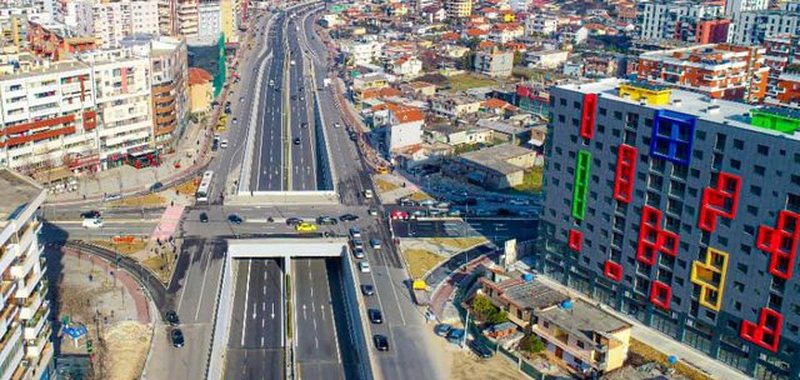
House as a form of business, where is it worth buying in Tirana? Apartments in the suburbs are recovering the investment faster than luxury areas
Buying an apartment continues to be one of the most popular forms of investment for Albanians, especially in Tirana, where the real estate market has seen......

Controlling Iranian money laundering schemes - US Treasury asks domestic banks to increase vigilance
In an effort to dismantle sophisticated financial systems used by Iran to circumvent international trade restrictions and pressure Tehran into a deal, the US......
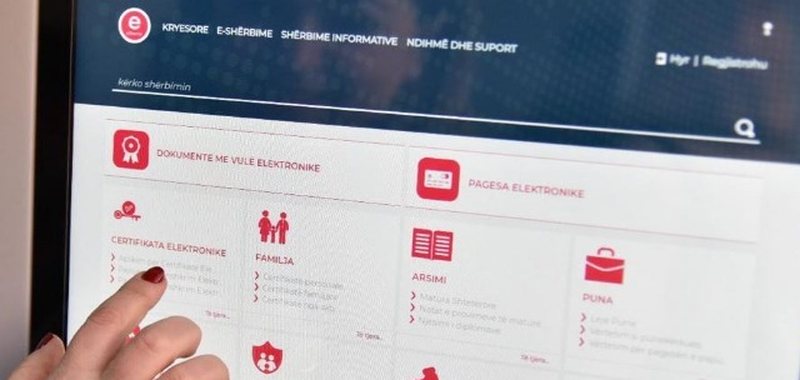
Digital transformation continues, interactions increase in e-albania/ Over 44 million transactions were carried out during April
The e-Albania government platform continues to remain one of the main tools for citizens to receive public services online. During April 2026, statistics......

AAPSK financed the reconstruction of the GJKKO premises with 104.2 million lekë
The new premises of the Special Court Against Corruption and Organized Crime (SCOC), inaugurated on Monday, were built thanks to financial support provided by......
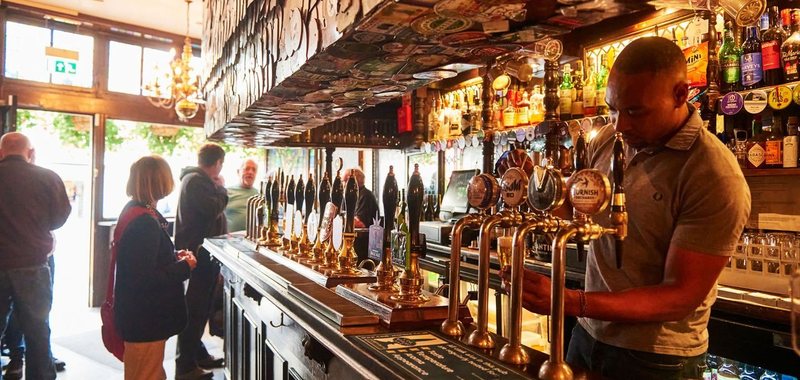
Where do people work the most on weekends? - Balkan and Mediterranean countries lead
More than one in five workers across Europe, 21.3%, regularly work shifts on Saturdays and Sundays, according to the latest Eurostat data. In some countries,......

Up to 2.5 million lek to support businesses - AIDA opens call for financing of micro, small and medium-sized enterprises
The Albanian Investment Development Agency (AIDA) and the Ministry of Economy and Innovation have announced a call for applications for financial support for......
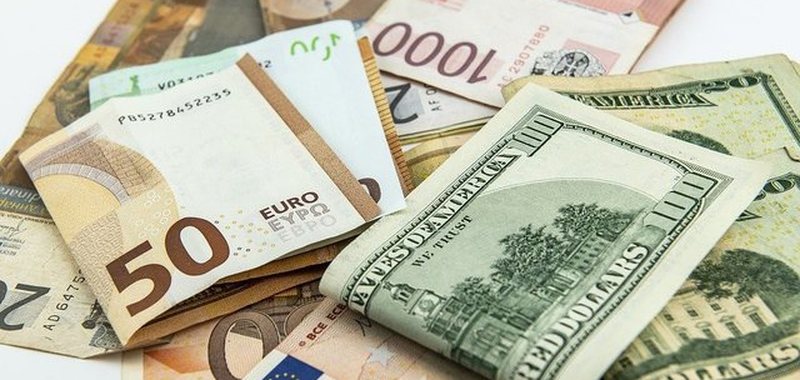
The US Dollar Strengthens Again – The Franc and the Pound Weaken Significantly!
The US dollar has registered another increase in value this morning, strengthening from the day before as it was bought for 80.7 lek and sold for 81.7 lek......