



Digitalization of the economy in Albania remains partial - Businesses slowly adopt new technologies, while the use of AI is still limited


Albania is making progress in internet usage and digital infrastructure, but it lags behind in digital skills and business adoption of technology.
According to the latest report on the Digital Economy and Society Index for the Western Balkans, in 2024 around 86% of the population will use the internet, a high level and close to the regional average. However, this does not translate into sufficient digital skills.
Only 23% of citizens have basic digital skills, far below the regional average and far behind the European Union. While those with above-basic skills are only around 8%. The number of technology specialists also remains low, around 1% of the workforce.
On the other hand, businesses are showing more interest in training, with about 22% of them investing in digital skills training for employees.
In infrastructure, the situation is more positive. 98% of households have access to the internet, while the use of high-speed fixed lines has increased significantly. About 43% of households use internet over 100 Mbps.
However, the most advanced technologies remain limited. Ultra-fast internet above 1 Gbps is used by a very small proportion of households, and the 5G network is still in its early stages, despite the start of spectrum allocation at the end of 2024.
As for businesses, around 41% of small and medium-sized enterprises have reached a basic level of digitalization, but this is still below the regional and EU average.
The use of advanced technologies such as cloud, data analytics and artificial intelligence is gradually increasing, but remains limited. Only 9% of businesses use artificial intelligence.
In conclusion, Albania has made significant progress in internet penetration and infrastructure investments, but the main challenge remains increasing the digital skills of citizens and the wider use of technology by businesses.
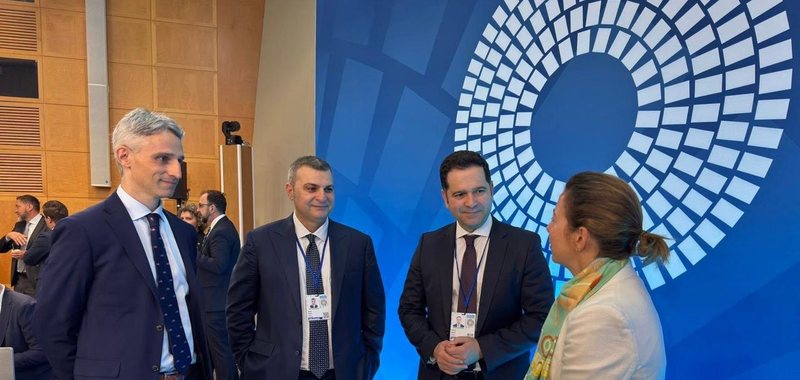
Malaj in the US: Stable Albanian economy, careful fiscal management has strengthened public finances
The Minister of Finance, Petrit Malaj, participated in the Spring Meetings of the International Monetary Fund and the World Bank Group, which took place on......
What does Albania buy from global export giants? From machinery and industrial equipment, to fuels and pharmaceutical products
The ten economies that dominate global exports are also among the main suppliers of goods entering the Albanian market. According to data compiled by Visual......
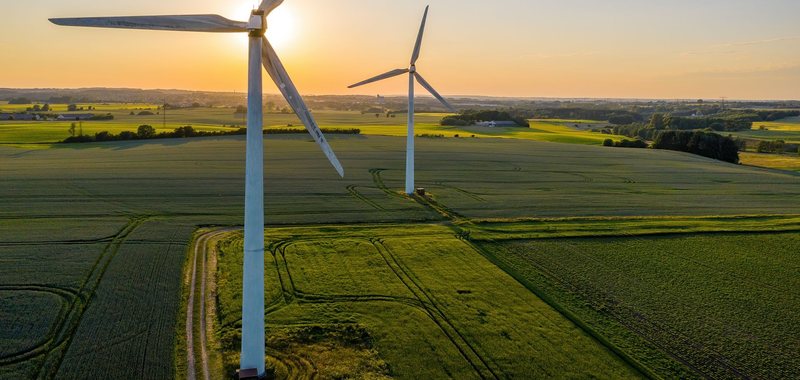
Wind power grew by 40% last year - Record addition of 165 GW, led by China
The global wind energy industry installed a record 165 gigawatts of new capacity last year, 40% more than in 2024 and largely driven by China, a report from......
The world lost $50 billion in oil from the war - What does this figure mean for the global economy?
The world has lost over $50 billion worth of unproduced crude oil since the start of the war with Iran nearly 50 days ago, and the consequences of the crisis......
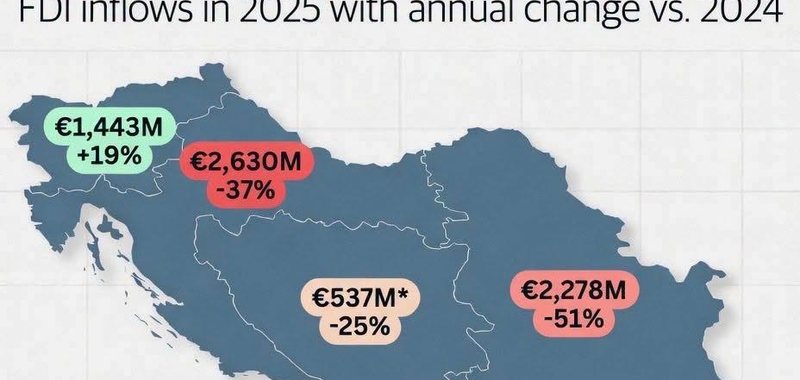
Kosovo, large increase in foreign investments in 2025 - They increased by 30%, reaching 1.03 billion euros
Kosovo is marking an important moment in economic development, positioning itself as a leader in the Balkan region for the growth of Foreign Direct......

How has this week started for the major currencies?
The US dollar has started the week positively, registering a slight increase in value compared to a week ago, as it was bought this morning at 80.8 lek and......

8 million homes in Italy, uninhabited - Analysis, 86% of owners cite non-payment of rent as main concern
In Italy, the housing crisis is not caused by a lack of housing, but by a supply that is struggling to become available, according to an analysis by the......

Pro-Russian ex-president wins Bulgarian elections - Rumen Radev's party gets over 44% of the vote
Pro-Russian former President Rumen Radev has won a landslide victory in Bulgaria's parliamentary elections, official results showed, potentially ending years......