



Real income growth in Europe - Larger economies lag behind, while Poland and Portugal lead

Countries and institutions track many indicators to measure economic growth, with Gross Domestic Product (GDP) growth among the most closely watched. However, GDP growth does not reflect what people are actually taking home in real income, even when adjusted for inflation.
Real household income per capita measures the change in income that households have available to spend or save, providing a more accurate reading of living standards.
Among the 16 European countries, 14 of them recorded an increase in real household income per capita last year compared to 2024, while only two of them recorded a decrease. Poland led the way with the highest real growth of 4.1%. The country also recorded the highest growth in both 2024 and 2025, showing a strong increase in real household income over the two years.
The OECD points out that "the increase in employee compensation offsets the decrease in social benefits, resulting in an acceleration in the growth of real household income per capita" in Poland.
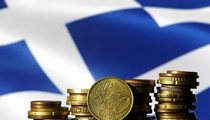
The Netherlands and Portugal also recorded increases of at least 2%. Denmark, Greece and Spain recorded increases between 1.5% and 2%. Belgium, Hungary and Sweden each recorded increases of over 1% in real household income per capita.
Italy matched the OECD average with a growth of 0.8% in 2025. The country recorded a large contraction in real household income per capita, falling by 0.9% in the fourth quarter of 2025. This was mainly due to rising inflation and a decline in property income, according to the OECD.
Finland and Austria were the only two countries where real annual household income per capita fell in 2025, recording declines of 0.7% and 1.8%, respectively.
For 2025 as a whole, growth in real household income per capita across the OECD slowed to 0.8%, from 2.1% in 2024. The same trend remained broadly the same across all European countries.
IMF: Curb horizontal subsidies - Fiscal spending only for vulnerable households and businesses
The International Monetary Fund is urging governments to target fiscal spending during times of crisis, such as the current one, only to vulnerable......

'More money' for bank safety - Emergency Intervention Fund reached 8.22 billion lek in April
The Emergency Intervention Fund, which is used to rescue commercial banks in the event of bankruptcy or financial crises, has reached 8.22 billion lek.......

Exclusion of Chinese equipment - Study, cost for EU reaches 367.8 billion euros
The European Union's proposals to strengthen cybersecurity by phasing out equipment from Chinese suppliers could cost it more than $400 billion over the next......

Amnesty law, how can farmers buy back their years of work?/ 294-384 euros per year, all fines and late fees in the system are eliminated
Farmers registered in the tax system, that is, who have or have had a NIPT, regardless of whether they are currently active or not, will benefit from the law......
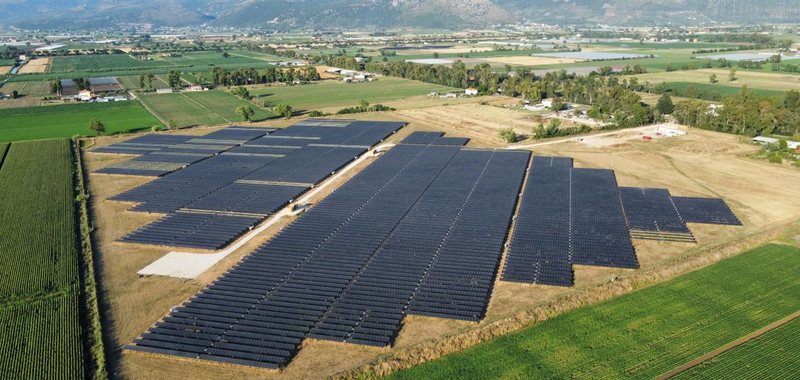
Solar electricity, 3 new plants with a capacity of 174 megawatts are added in Savër, Saranda and Poliçan
The Council of Ministers, in its meeting of May 20, 2026, approved the construction of three new solar power plants. The photovoltaic power plants will be......
State Intelligence Service, law changes: Collects information on threats to economic security
The Council of Ministers has approved the amendments to the law “On the National Intelligence Service” and has submitted them for approval to the Albanian......
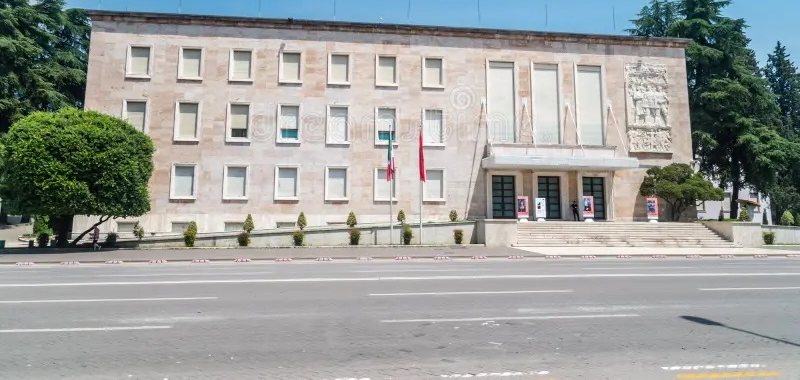
Government meeting, decisions and draft laws approved by ministers today are published
The Media and Information Agency has published the decisions and draft laws approved at today's government meeting, dated May 20, 2026. They......
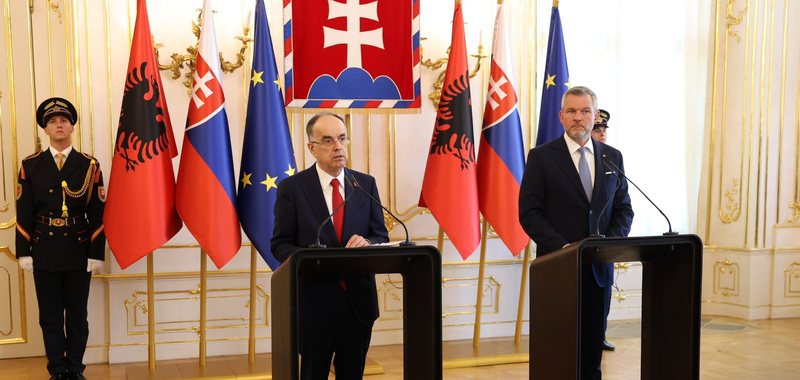
President Begaj visits Bratislava: Let's deepen cooperation in energy, tourism and agriculture
The President of the Republic, H.E. Bajram Begaj, paid an official visit to Slovakia at the invitation of his counterpart, Peter Pellegrini. During the......